
Elevate your living experience
Elevate your living experience

If you’ve ever scrolled through TikTok or tech news and thought, “Why do American smart homes look so different from ours?”, you’re not imagining it, it’s real.
While both the UK and US are embracing smart home technology faster than ever, the way people use it, the products they buy and even the reasons behind adoption vary more than you might expect.
In this guide, we’ll explore the key differences between UK and American smart home trends, what’s driving them, and how British homeowners can learn from their American counterparts without losing that signature UK practicality.
Smart homes are no longer a futuristic concept, they’re becoming mainstream. The difference isn’t about enthusiasm, it’s about infrastructure and lifestyle.
In the US, larger homes and widespread homeownership make automation more appealing. In the UK, smaller living spaces and older housing stock mean people focus on convenience and energy efficiency rather than going for full home automation plans.
Both countries share the same goal. Making everyday life easier, safer and more sustainable.
But the journey looks a little different on each side of the Atlantic.
British homeowners tend to approach smart technology with a “start small, scale later” mindset. The focus is on energy savings, practicality and integration with existing homes.
Here’s what’s smart products are trending in the UK right now:
The UK smart home market is shaped by practicality. The people want tech that fits seamlessly into everyday life, not flashy systems that require major renovations.
Across the pond, the American smart home scene is all about scale and integration.
US homeowners often invest in systems that connect lighting, heating, security and entertainment under one hub. Smart security is huge in the states. Doorbell cameras, motion sensors and AI surveillance are standard features that homes have.
Luxury automation is also on the rise. From smart fridges to voice-controlled showers, convenience drives innovation. And with larger properties and more sun exposure, solar powered automation is booming.
Many US smart home brands also offer subscription based services, such as cloud storage or premium AI features. It’s a market built around convenience and long-term investment, that makes consumers’ life controllable from their device.
In short, Americans are building homes that think for themselves, while Brits are making homes that work smarter to save.
There’s plenty the UK can borrow from the US approach, without losing its practicality.
Instead of buying gadgets one by one, consider how they’ll work together. A smart plug, bulb and speaker can create a mini ecosystem that feels cohesive.
Americans love “set and forget” automation. Routines that handle lighting, heating and reminders automatically. UK users can do the same with Alexa or Google Home products.
Doorbell cameras and motion sensors are becoming more affordable and can add peace of mind, especially for urban homes.
The UK’s focus on energy efficiency is a strength. Combining AI automation with eco-conscious devices can make homes both smart and green.
Click the Images or Buttons to Shop!

This sleek doorbell camera offers HD video, motion alerts, and two-way audio. Perfect product for keeping an eye on visitors or deliveries.
It’s ideal for UK homes that want smart security without complicated wiring, and it’s a favourite in the US for its reliability and design.
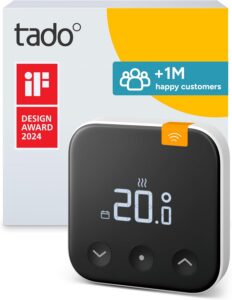
Designed for British homes, Tado’s smart thermostat helps reduce heating costs and integrates seamlessly with most boilers.
It’s built for the UK’s energy-conscious lifestyle and offers smart scheduling, geofencing and app-based control.

Nanoleaf’s modular lighting panels are now trending in the UK too. They respond to touch, music, and voice commands, they’re perfect for adding personality to any space.
It’s a fun, design-led way to experience smart lighting that feels modern and interactive.
Smart home adoption is growing rapidly worldwide, but the UK and US are shaping the future in different ways.
The US leads in innovation and large scale integration.
The UK leads in sustainability and accessibility.
Both approaches are valid, and together, they show how smart technology can adapt to different lifestyles and priorities.
As British homes continue to modernise, expect to see more hybrid trends: eco-friendly automation, AI-driven energy management and smarter security that fits urban living.
Whether you’re in London or Los Angeles, smart homes are becoming part of everyday life. The difference lies in how we use them and that’s what makes this space so exciting.
Start small, stay curious, and build a setup that fits your lifestyle. Because no matter where you live, the smartest home is the one that works for you.
What are the main differences between UK and US smart homes?
US homes tend to have larger, integrated systems with full-home automation, while UK homes focus on smaller, energy-efficient setups that fit existing spaces.
Is smart home adoption growing faster in the US?
Yes, the US currently leads in adoption rates, but the UK is catching up quickly thanks to affordable, plug-and-play devices.
Do UK smart home devices work in US homes (and vice versa)?
Most do, but voltage and plug types differ. Always check compatibility before buying international models.
Are smart homes expensive to build?
Not necessarily. In the UK, you can start with budget-friendly devices like smart plugs or bulbs for under £30.
Which voice assistant is most popular in the UK?
Amazon Alexa remains the top choice, followed by Google Home. Apple HomeKit is growing among iPhone users.
Can smart homes help reduce energy bills?
Absolutely. Devices like smart thermostats and plugs can cut energy use by learning your habits and optimising schedules.
Will smart homes become standard in the UK?
Yes, as technology becomes more affordable and eco-focused, smart features are expected to become standard in new builds by 2030.
HomeSmarti participates in the Amazon Associates programme. We may earn a small commission from qualifying purchases at no extra cost to you.